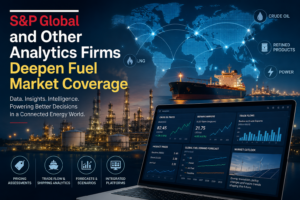
Analytics firms such as S&P Global are broadening their coverage of fuel and energy markets, providing data and research that span crude, refined products, LNG, and power. Their platforms offer price assessments, trade-flow analysis, and forward-looking scenarios that help market participants benchmark deals and plan strategies. As fuel markets become more interconnected, access to reliable cross‑commodity intelligence is becoming a competitive necessity.
One core offering is detailed pricing across a wide range of benchmarks and locations. From physical crude assessments to gasoline, diesel, and jet fuel markers, these price points serve as references for term contracts, spot deals, and hedging programs. Traders rely on them to evaluate arbitrage opportunities and to structure formulas that reflect regional supply-demand conditions. Transparency around methodology and liquidity is critical to maintaining confidence in these benchmarks.
Trade-flow and shipping analytics are another area of focus. By tracking cargo movements and vessel positions, analytics firms help clients understand how barrels are moving between regions and how quickly balances are adjusting to new information. This insight is especially valuable when geopolitical events or sanctions disrupt normal patterns, requiring traders and refiners to reroute supplies or identify alternative counterparty options.
Forward-looking research ties these data streams together with macro and policy analysis. Reports on refining margins, energy transition pathways, and long-term demand for different fuel types give companies a framework for capital allocation and risk management decisions. For example, refiners evaluating investments in diesel hydrotreating or renewable diesel units need credible projections of future demand and regulatory trajectories.
As competition in the analytics space intensifies, providers are investing in user-friendly platforms, APIs, and integration tools that allow clients to embed data directly into internal systems. Customizable dashboards, alerts, and scenario tools help different teams—from trading to corporate strategy—derive value from the same underlying datasets. In a market where information speed and quality can determine profitability, high-grade analytics have become a core infrastructure investment.